

Table of Contents
You might love the taste of seafood, but did you know that it also brings a world of health benefits? I mean, how good it is if you can get healthy by eating your favorite food. From heart health to brain function, seafood offers a variety of essential nutrients that make it a perfect addition to your meals. But what exactly makes seafood so beneficial for your health? Let’s dive in and explore the nutritional benefits of seafood!
Nutrient-Rich Profile of Seafood
When we talk about seafood, we’re discussing one of the most nutrient-dense food groups available. Seafood isn’t just tasty—it’s a powerhouse of essential nutrients that play a role in nearly every system of your body. Here’s why seafood nutritional benefits are so powerful:
- Protein: Seafood is packed with high-quality protein, which is crucial for building and repairing tissues, supporting immune function, and maintaining strong muscles. A 3-ounce serving of salmon contains about 22 grams of protein, making it an excellent source of lean protein for muscle repair.
- Omega-3 Fatty Acids: Perhaps the most famous benefit of seafood, omega-3 fatty acids, are found abundantly in fatty fish like salmon, mackerel, and sardines. Omega-3s are known for their heart-healthy properties, helping to reduce inflammation, lower blood pressure, and improve cholesterol levels. A 3-ounce serving of salmon contains approximately 1.5 grams of omega-3s, helping to improve heart health.
- Vitamins and Minerals: Seafood is an excellent source of vitamins like Vitamin A (for eye health), Vitamin D (for bone health and immune support), and Vitamin B12 (for nerve function and red blood cell production). It also provides important minerals like iodine, zinc, and selenium, all of which play roles in metabolism, immune function, and thyroid health. For example, a 3-ounce serving of oysters provides 74% of the recommended daily intake of zinc, one of the most important essential nutrients.
Health Benefits of Seafood
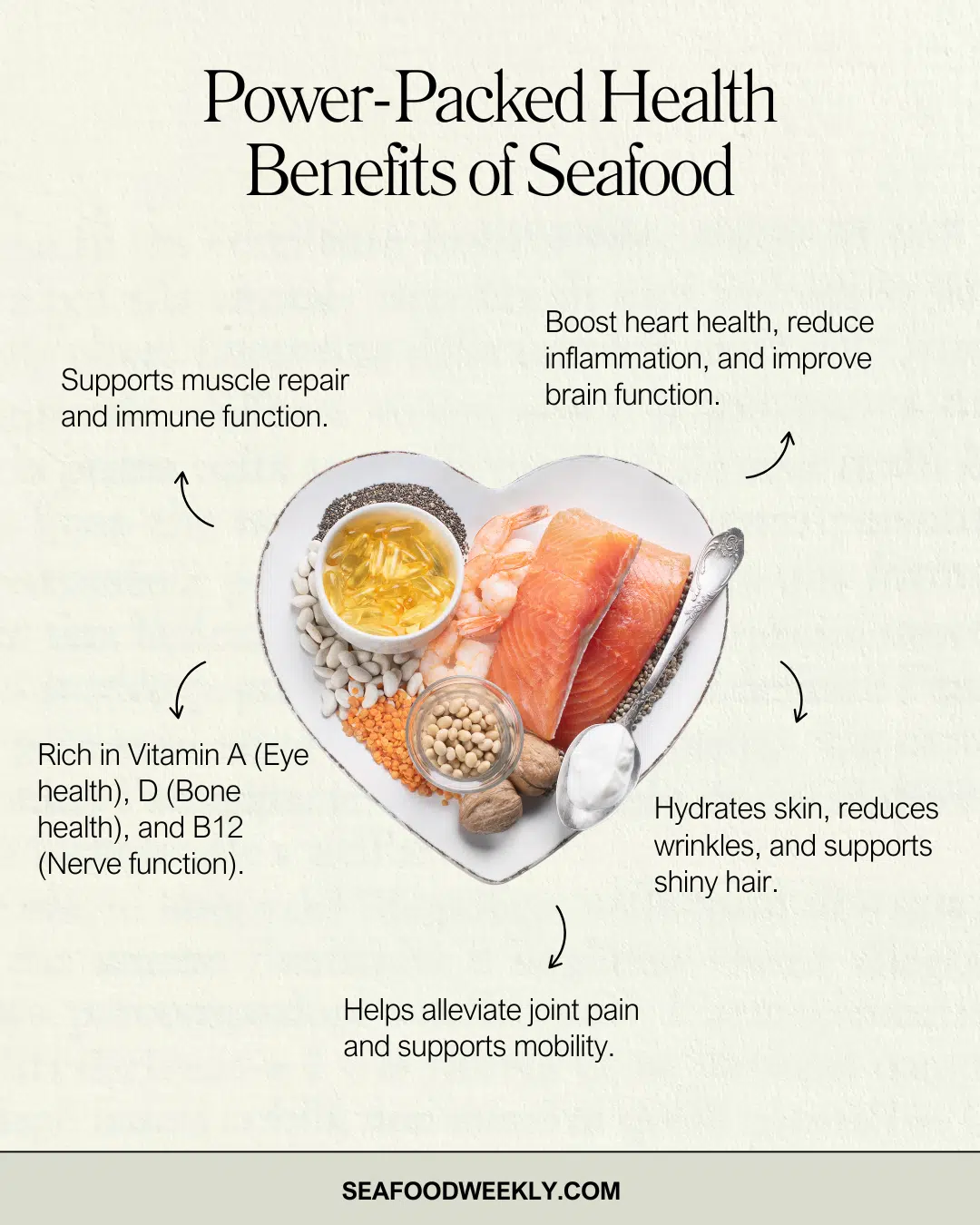 Now, let’s take a closer look at the specific health benefits of seafood, which go far beyond its delicious taste. Eating fish regularly provides a wide range of seafood nutritional benefits for your overall health.
Boosting Heart Health
If you’re looking to improve your heart health, seafood should be on your menu. The omega-3 fatty acids found in fatty fish like salmon, tuna, and mackerel are well-known for their ability to support cardiovascular health. These fatty acids help reduce inflammation, lower triglycerides, and improve overall cholesterol levels. A 3-ounce serving of salmon can help reduce bad cholesterol (LDL) by up to 10%.
- Omega-3s Reduce Heart Disease Risk: Regular consumption of fatty fish like salmon and mackerel can reduce the risk of heart disease and heart attack by up to 30%.
- Improved Cholesterol Levels: Omega-3s help reduce triglycerides and increase good cholesterol (HDL), supporting a healthy lipid profile and healthy blood pressure.
Research has shown that regularly eating seafood reduces the risk of heart disease and stroke. The American Heart Association recommends consuming two servings of fatty fish per week to maintain heart health and lower the risk of cardiovascular events.
Improving Brain Function and Mental Health
Omega-3 fatty acids are also crucial for brain health. In fact, studies suggest that eating seafood regularly can reduce the risk of cognitive decline and improve brain function in aging adults. Omega-3s have been linked to a reduced risk of Alzheimer’s disease, depression, and anxiety. A 3-ounce serving of salmon contains around 1.5 grams of DHA (docosahexaenoic acid), which is particularly beneficial for cognitive function.
- Cognitive Decline Prevention: Regular omega-3 consumption may lower the risk of Alzheimer’s disease and cognitive decline.
- Mood Improvement: Omega-3s play a role in improving mood and mental clarity, reducing symptoms of depression and anxiety.
For those dealing with mental health challenges, consuming seafood can help improve mood and cognitive function, thanks to the positive impact of omega-3s on brain chemistry. Whether it’s for better concentration, memory, or mental clarity, adding seafood to your diet is a smart move for your brain function.
Supporting Eye Health
Seafood, particularly fatty fish like salmon and sardines, is rich in Vitamin A. Vitamin A is essential for maintaining healthy vision and preventing eye conditions like age-related macular degeneration (AMD) and night blindness. Omega-3 fatty acids also contribute to eye health by protecting the eyes from oxidative stress and inflammation. A 3-ounce serving of sardines provides about 13% of your daily Vitamin A needs.
- Protects Against Macular Degeneration: Omega-3s reduce the risk of age-related macular degeneration (AMD).
- Supports Night Vision: Vitamin A found in seafood plays a key role in maintaining healthy vision and preventing night blindness.
Incorporating seafood into your diet is an easy way to support long-term eye health, especially as you age.
Enhancing Skin and Hair Health
Seafood, particularly oily fish, is beneficial for your skin and hair. Omega-3 fatty acids help keep your skin hydrated, reduce the appearance of wrinkles, and may even reduce the risk of acne. If you struggle with dry or irritated skin, omega-3s can help restore moisture and smoothness. For example, a 3-ounce serving of salmon contains around 1.5 grams of omega-3s that support skin hydration and elasticity.
- Hydrates and Reduces Wrinkles: Omega-3s help to maintain skin elasticity and hydration, preventing dryness and wrinkles.
- Promotes Shiny Hair: Omega-3s contribute to healthier hair by improving circulation to the scalp.
Additionally, omega-3s promote healthy, shiny hair by improving circulation to the scalp and ensuring that hair follicles receive the necessary nutrients for growth and strength.
Improving Joint Health
If you experience joint pain or inflammation, seafood can be a great addition to your diet. The omega-3s in seafood have strong anti-inflammatory properties that can help reduce the pain and swelling associated with conditions like arthritis. A 3-ounce serving of mackerel provides about 1.5 grams of omega-3s, helping to fight joint inflammation.
- Anti-Inflammatory Effects: Omega-3 fatty acids found in seafood can significantly reduce inflammation in the joints, helping to manage pain.
- Alleviates Arthritis Symptoms: Regular consumption of omega-3s helps reduce joint stiffness and discomfort.
Eating fish such as salmon, sardines, and mackerel can alleviate symptoms of joint pain, helping you stay mobile and active without relying heavily on anti-inflammatory medications.
Types of Seafood to Include in Your Diet
While all seafood has health benefits, some varieties stand out due to their exceptional nutrient profiles. Here are a few types of seafood that should make their way into your diet:
Fatty Fish
 Credit: news-medical.net
Commonly known, fatty fish, such as salmon, mackerel, sardines, and herring, are some of the best sources of omega-3 fatty acids. These fish are rich in both EPA (eicosapentaenoic acid) and DHA (docosahexaenoic acid), the two types of omega-3s that provide the most health benefits. Omega-3s from fatty fish have been shown to improve heart health, reduce inflammation, and support brain function.
For instance, a 3-ounce serving of salmon contains about 2.6 grams of omega-3s, while mackerel has around 4.5 grams per serving, making these fish powerful contributors to your seafood nutritional value.
Shellfish

Credit: islandhealth.org
Shellfish, such as oysters, clams, mussels, and shrimp, offer a variety of minerals that are essential for good health. They are especially rich in zinc, selenium, and iodine. Zinc is crucial for immune function, selenium acts as a powerful antioxidant, and iodine helps regulate thyroid function.
For example, a 3-ounce serving of shellfish provides 74% of the daily recommended intake of zinc, while clams provide an excellent source of iron, with 3 ounces containing up to 20% of your daily iron needs. The health benefits of seafood mussels are significant, as they offer high amounts of protein, omega-3s, and essential minerals.
White Fish

Credit: vitalchoice.com
While they don’t offer as many omega-3s as fatty fish, white fish such as cod, tilapia, and haddock still provide high-quality protein and essential vitamins and minerals.
These fish are great options for those who prefer a milder taste or are just getting started with adding seafood to their diet. A 3-ounce serving of cod provides around 20 grams of protein and 10% of the recommended daily intake of Vitamin B12.
How to Incorporate Seafood Into Your Diet
- Grilled or Baked Fish: Grilling or baking fish is a healthy way to prepare it without adding excess fat or calories. Simply season your fish with herbs, spices, and a drizzle of olive oil for a tasty and nutritious meal. Pair it with vegetables for a complete, balanced dish.
- Seafood Salads: A seafood salad is a refreshing and light way to enjoy seafood. Add shrimp, crab, or tuna to a bed of mixed greens and top with a light vinaigrette for a quick and satisfying meal.
- Seafood Pasta: Add seafood to your pasta dishes for a boost of protein and omega-3s. Shrimp, scallops, or white fish can be tossed into spaghetti, fettuccine, or penne for a delicious, nutrient-packed meal.
- Seafood Boil: For a fun and flavorful twist, try a seafood boil. Use a combination of shrimp, crab, and lobster, and serve with your favorite seasonings for a complete meal. This method is rich in seafood boil nutrition facts and makes for a satisfying dinner.
Risks and Considerations
 Credit: hsph.harvard.edu
While seafood is generally safe and healthy, there are a few considerations to keep in mind:
Mercury in Seafood
Certain fish, especially larger fish like tuna, swordfish, and shark, can contain higher levels of mercury. While mercury is not a concern for most people in moderate amounts, it can be harmful to pregnant women, young children, and those with compromised immune systems. It’s a good idea to limit your consumption of high-mercury fish and focus on varieties that are lower in mercury, such as salmon and sardines.
Sustainable Sourcing
Choosing sustainably sourced seafood is important for both your health and the health of the environment. Look for certifications like the Marine Stewardship Council (MSC) label, which ensures that the seafood has been sourced responsibly and sustainably.
Ending Remarks
It all boils down to the fact that seafood is one of the most nutrient-dense food groups available, offering a variety of nutritional benefits like improved heart health, enhanced brain function, and better skin and joint health. So, the next time you’re at the store, consider picking up some salmon, shrimp, or oysters. With so many delicious and nutritious options, seafood is a versatile and valuable addition to any diet.
Frequently Asked Questions
Not sure if you should pick seafood for the next grocery run? Let’s help you.
What are the top health benefits of seafood?
Seafood boosts heart health, improves brain function, strengthens the immune system, and promotes healthier skin and hair.
How often should I eat seafood?
Aim for at least two servings of seafood per week to get the most health benefits.
What types of seafood should I eat for the best nutrition?
Fatty fish like salmon, mackerel, and sardines, along with shellfish like oysters and clams.
Can seafood help with weight loss?
Yes, seafood is low in calories but high in protein, making it great for weight management.
Is seafood safe for everyone?
While generally safe, pregnant women should limit high-mercury fish, and allergies may also be a concern for some individuals.

GIPHY App Key not set. Please check settings